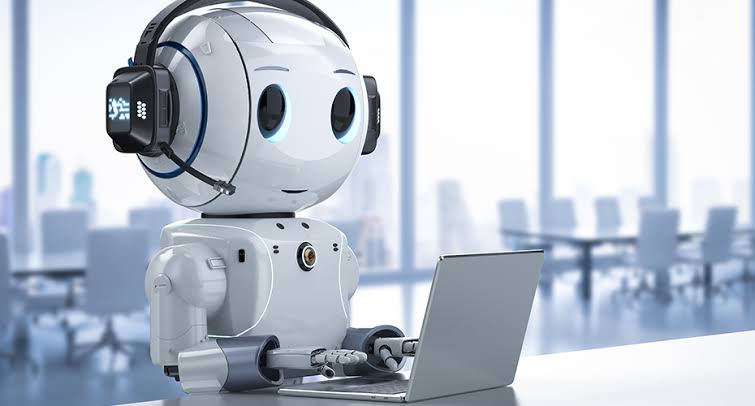
Artificial Intelligence (AI) has revolutionized many industries and its impact can also be seen in the field of virtual assistants and chatbots. These AI-powered tools are changing the way businesses interact with their customers and streamlining various tasks, making them more efficient and effective. In this blog post, we’ll explore how AI is transforming virtual assistants and chatbots, and what it means for businesses.
First and foremost, AI is making virtual assistants and chatbots more intelligent and human-like. With advanced natural language processing (NLP) technology, AI-powered virtual assistants can understand and respond to complex questions and requests, just like a human assistant would. This is providing a more personalized and seamless experience for customers, who can receive help and information quickly and easily.
One of the key benefits of AI in virtual assistants and chatbots is their ability to handle a high volume of tasks and inquiries simultaneously. This is particularly useful for businesses with a large customer base, as it reduces the burden on human customer service representatives and ensures that customers receive prompt and efficient service.
Another way that AI is changing virtual assistants and chatbots is through their ability to make predictions and provide recommendations. AI algorithms can analyze customer data to determine their preferences and make personalized recommendations, such as product suggestions or customer service solutions. This not only provides a better experience for customers but also helps businesses to increase sales and customer satisfaction.
Another exciting application of AI in virtual assistants and chatbots is their ability to handle complex tasks, such as fraud detection and resolution. AI algorithms can analyze customer data and behavior to detect and prevent fraud, reducing the risk for businesses and providing peace of mind for customers.
However, while AI has the potential to revolutionize virtual assistants and chatbots, there are also some challenges to consider. One of the main challenges is ensuring that AI algorithms are trained on accurate and unbiased data, as this can impact their ability to make accurate predictions and recommendations. Additionally, some customers may still prefer human interaction, which means that businesses need to find the right balance between AI and human customer service representatives.
In conclusion, AI is transforming virtual assistants and chatbots, making them more intelligent, efficient, and effective. With advanced NLP technology, AI-powered virtual assistants can provide a more personalized and seamless experience for customers, while also reducing the burden on human customer service representatives. However, it’s important for businesses to carefully consider the potential challenges of AI, such as bias and accuracy, to ensure that they are using AI in a responsible and effective manner.
Overall, AI in virtual assistants and chatbots is a rapidly growing field with endless potential. As AI technology continues to evolve, it will be exciting to see how businesses continue to leverage it to improve customer experiences and streamline various tasks. If you’re interested in learning more about AI in virtual assistants and chatbots, be sure to stay tuned for the latest developments and insights in the field.
Facts
1- AI-powered virtual assistants and chatbots are becoming more intelligent and human-like, thanks to advanced natural language processing technology.
2- Virtual assistants and chatbots can handle a high volume of tasks and inquiries simultaneously, reducing the burden on human customer service representatives.
3- AI algorithms can analyze customer data to make personalized recommendations and predictions, resulting in increased sales and customer satisfaction.
4- AI can also handle complex tasks such as fraud detection and resolution, providing peace of mind for both businesses and customers.
5- Ensuring that AI algorithms are trained on accurate and unbiased data is a challenge that businesses must consider when implementing AI in virtual assistants and chatbots.
7- While some customers may still prefer human interaction, AI-powered virtual assistants and chatbots provide a more efficient and personalized experience for many customers.
8-AI in virtual assistants and chatbots is a rapidly growing field with endless potential for businesses to streamline tasks and improve customer experiences
Tags
Artificial Intelligence,Cyber security,Machine learning,Data breaches,Threat detection,Malware,Network security,Cyber attacks,AI and security,Data security,Cloud security,Endpoint security,Information security,Vulnerability management,Identity and access management,Encryption,Internet security,Firewall,Security analytics,Risk management.
 Ghost AI
One response to ““Intelligent Assistance: How Artificial Intelligence is Revolutionizing Virtual Assistants and Chatbots””
[…] Read More.10. AI-powered virtual assistants and chatbots: Key trends, use cases and benefits .. Read 11. AI in healthcare: Applications and benefits of AI in the medical field.. Read More.12. The […]
LikeLike