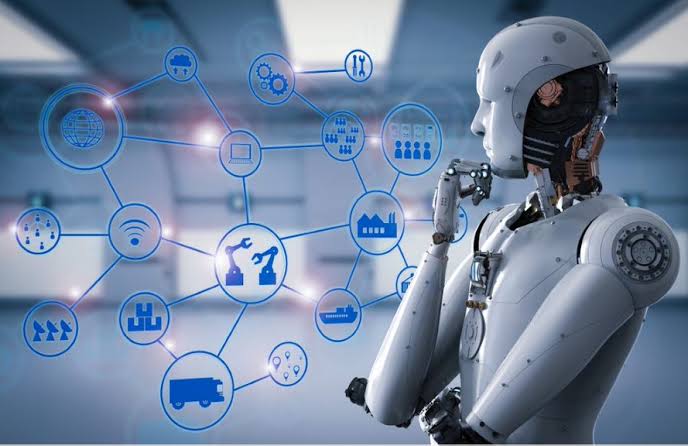
Artificial Intelligence (AI) has been transforming various industries, including supply chain management, over the past few years. AI has the potential to revolutionize the way supply chains are managed and optimized, providing significant benefits for companies. In this article, we will explore the role of AI in supply chain management and optimization, its benefits, challenges, and the future of AI in supply chain management.
Benefits of AI in Supply Chain Management and Optimization:
Improved visibility: AI algorithms can provide real-time data and insights into supply chain operations, improving visibility and allowing companies to make informed decisions.
Increased Efficiency: AI algorithms can automate repetitive tasks, freeing up employees to focus on more creative and strategic tasks. This leads to improved productivity and efficiency, ultimately leading to higher profitability for the company.
Improved Forecasting: AI algorithms can analyze large amounts of data, providing accurate demand forecasting and allowing companies to make informed decisions about inventory management.
Increased Responsive: AI algorithms can quickly identify and respond to changes in supply and demand, improving the responsiveness of the supply chain.
Improved risk management: AI algorithms can identify potential risks in the supply chain, such as disruptions and supply chain disruptions, allowing companies to take proactive measures to mitigate those risks.
Challenges of AI in Supply Chain Management and Optimization:
Implementation Cost: Implementing AI technology in supply chain management can be expensive, requiring significant investment in hardware and software. This can be a barrier for small and medium-sized businesses.
Algorithm Biased: AI algorithms are only as unbiased as the data they are trained on. If the training data is biased, the AI algorithm will also be biased, leading to unfair and discriminatory decisions.
Lack of Transforming: AI algorithms can be complex and difficult to understand, leading to a lack of transparency in their decision-making processes. This can make it difficult for employees and customers to trust the technology.
Integration with existing systems: Integrating AI technology with existing supply chain management systems can be challenging, requiring significant time and resources.
The Future of AI in Supply Chain Management:
The use of AI in supply chain management is expected to continue to grow in the coming years, as more companies adopt AI technology to improve their operations and competitiveness. As AI technology improves, it is likely that more tasks will become automated, leading to increased efficiency and cost savings.
However, it is also important for companies to address the challenges of AI in supply chain management, such as algorithm bias and lack of transparency, in order to ensure that the technology is used ethically and responsibly. This can include providing training and support for employees who may be impacted by automation, and implementing measures to ensure that AI algorithms are transparent and unbiased.
Conclusion:-
In conclusion, AI has the potential to revolutionize supply chain management and optimization. By providing real-time data and insights, improving efficiency and responsiveness, and reducing costs, AI has the potential to provide significant benefits for companies. However, it is important for companies to address the challenges of AI in supply chain management, such as algorithm bias and lack of transparency, in order to ensure that the technology is used ethically and responsibly.
 Ghost AI