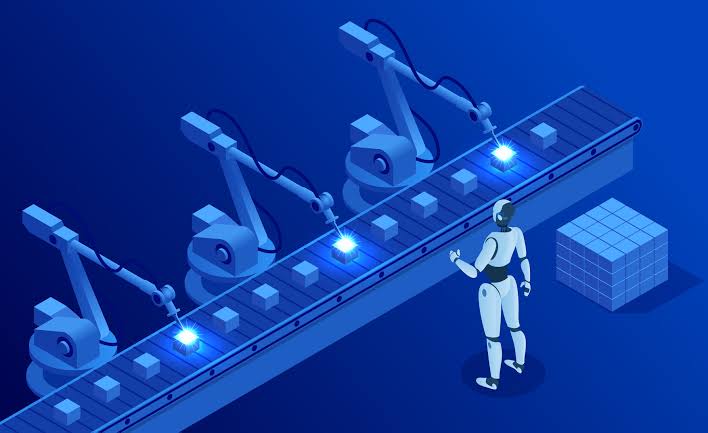
Artificial Intelligence (AI) has been transforming various industries, including the workplace, over the past few years. Automation has been one of the biggest impacts of AI in the workplace, allowing companies to streamline their processes, increase efficiency, and reduce costs. In this article, we will explore the role of AI in automation in the workplace and its benefits, challenges, and the future of AI in the workplace.
Benefits of AI in Automation in the Workplace:
Increased efficiency: AI algorithms can automate repetitive tasks, freeing up employees to focus on more creative and strategic tasks. This leads to improved productivity and efficiency, ultimately leading to higher profitability for the company.
Improved Accuracy: AI algorithms are designed to make fewer errors than humans. By automating processes, the chances of human error are reduced, leading to improved accuracy and consistency in the workplace.
Cost Savings: Automation using AI reduces the need for manual labor, which in turn reduces costs associated with hiring and training employees. This can be a significant cost savings for companies, especially in industries where labor costs are high.
Increased customer satisfaction: AI-powered chatbots and virtual assistants can provide instant customer support, improving the customer experience and satisfaction levels.
Improved Data Analysis: AI algorithms can analyze large amounts of data quickly and accurately, providing insights and trends that would be difficult for humans to identify. This can help companies make informed business decisions and stay ahead of the competition.
Challenges of AI in Automation in the Workplace:
Job loss: Automation can lead to job loss, especially in industries where manual labor is common. This can have a negative impact on the workforce, leading to unemployment and decreased job security.
Algorithm bias: AI algorithms are only as unbiased as the data they are trained on. If the training data is biased, the AI algorithm will also be biased, leading to unfair and discriminatory decisions.
Lack of transparency: AI algorithms can be complex and difficult to understand, leading to a lack of transparency in their decision-making processes. This can make it difficult for employees and customers to trust the technology.
Implementation costs: Implementing AI technology in the workplace can be expensive, requiring significant investment in hardware and software. This can be a barrier for small and medium-sized businesses.
The Future of AI in the Workplace:
The use of AI in the workplace is expected to continue to grow in the coming years, as more companies adopt automation and AI technology to improve their processes and competitiveness. As AI technology improves, it is likely that more tasks will become automated, leading to increased efficiency and cost savings.
However, it is also important for companies to address the challenges of AI in the workplace, such as job loss and algorithm bias, in order to ensure that the technology is used ethically and responsibly. This can include providing training and support for employees who may be impacted by automation, and implementing measures to ensure that AI algorithms are transparent and unbiased.
Conclusion:
In conclusion, AI has had a significant impact on the workplace through automation. By streamlining processes, improving accuracy and efficiency, and reducing costs, AI has the potential to provide significant benefits for companies. However, it is important for companies to address the challenges of AI, such as job loss and algorithm bias, in order to ensure that the technology is used ethically and responsibly.
Here are ten facts about AI in automation:
AI-powered automation has been widely adopted across various industries, including healthcare, finance, manufacturing, and retail.
AI algorithms can automate repetitive tasks, freeing up employees to focus on more creative and strategic tasks.
AI algorithms can process large amounts of data quickly and accurately, providing insights and trends that would be difficult for humans to identify.
AI-powered chatbots and virtual assistants are increasingly being used to provide instant customer support, improving the customer experience and satisfaction levels.
Automation using AI can lead to job loss, especially in industries where manual labor is common.
Algorithm bias is a major challenge in AI automation, as AI algorithms are only as unbiased as the data they are trained on.
The implementation of AI technology in the workplace can be expensive, requiring significant investment in hardware and software.
AI algorithms can be complex and difficult to understand, leading to a lack of transparency in their decision-making processes.
The use of AI in the workplace is expected to continue to grow in the coming years, as more companies adopt automation and AI technology to improve their processes and competitiveness.
It is important for companies to address the challenges of AI in the workplace, such as job loss and algorithm bias, in order to ensure that the technology is used ethically and responsibly.
 Ghost AI
One response to “AI in Automation in Workplace”
[…] experience…Read More3. AI and automation in the workplace: Impacts, benefits and challenges..Read More.4. The role of AI in supply chain management and optimization..Read More.5. Ethics in AI business: […]
LikeLike